

When Do Parents Need a Lawyer for School Bullying?
Most bullying cases do not need a lawyer. Some clearly do. Knowing the difference before you act matters more than most parents realize. The decision
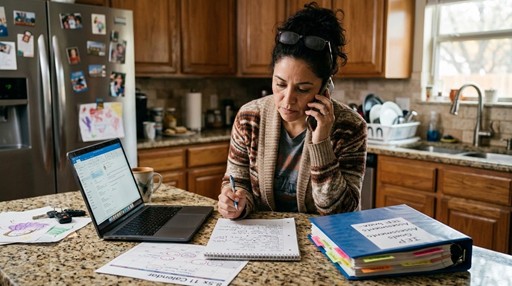
Most parents of children with IEPs understand the annual review cycle. The meeting happens once a year. The team convenes. Goals are updated. Services are reviewed. Parents sign off or raise concerns and the year moves forward.
What many parents do not fully understand is that the annual review is not the only time an IEP meeting can happen. Parents have the right to request a meeting at any time — and when bullying is actively disrupting their child’s ability to access their educational program, that right becomes urgently relevant.
An emergency IEP meeting is not a formal legal term in most states — but it describes a real and legitimate request: a parent asking the school to convene the IEP team quickly because the situation has changed in a way that cannot wait until the next scheduled review. Knowing how to make that request, what to say, and what to expect is what this article covers.
You request an emergency IEP meeting by sending a written request — an email — to the school’s special education coordinator or case manager, with a copy to the building principal. The request should clearly state that you are invoking your right as a parent to request an IEP team meeting, identify the reason — the bullying situation and its impact on your child’s educational access — and ask for the meeting to be scheduled within a specific and urgent timeframe.
Under IDEA, schools are required to respond to a parent’s request for an IEP meeting. While there is no universally mandated timeline for responding to a parent-initiated emergency request in the way there is for initial evaluations or annual reviews, most districts have internal timelines — and a documented, urgent written request creates pressure that a verbal request does not.
The meeting request is not the end of the process. It is the beginning of a more formal track — one that puts the school’s response to the bullying situation inside the IEP framework, where the stakes for inadequate response are higher.
Parents who reach the point of requesting an emergency IEP meeting because of bullying are almost always in a situation where two things are happening simultaneously — and neither one is being adequately addressed.
The bullying complaint has not produced a real response. The parent has reported the bullying through the standard school process and has received vague assurances, minimal action, or outright dismissal. The situation has continued. The child is still being targeted.
The child’s IEP is being affected in visible ways. Services are being missed. Goals are stalling. The child is avoiding parts of the school building where their sessions take place. Emotional dysregulation is increasing. The parent can see the connection between what is happening socially and what is happening educationally — and the school has not acknowledged that connection.
The standard bullying escalation path feels inadequate for this child. A child with an IEP may have vulnerabilities, communication differences, or support needs that make the bullying more damaging and the school’s standard response less appropriate. The parent understands that this child needs more than a hallway conversation and a promise to monitor the situation.
The parent wants the situation formally inside the IEP structure. Requesting an IEP meeting moves the bullying response out of the general education discipline track and into the special education framework — where the school’s obligations are federally mandated, where documentation is more rigorous, and where the consequences of inadequate response are more significant.


Requesting an IEP meeting is itself an escalation — but it is not always enough. Consider escalating further if:
Requesting an emergency IEP meeting is one of the most concrete protective steps an IEP parent can take when bullying is affecting their child’s education. The request itself puts the school on notice in a way that a general bullying complaint does not. If you want help drafting the request, preparing for the meeting, or deciding what to ask the team to include in any IEP amendments, outside support can help you walk in prepared.
IDEA sets clear timelines for initial evaluations and annual IEP reviews, but it does not define a single universal deadline for parent-initiated meeting requests. In practice, most districts follow internal policies requiring a response within 10 to 15 school days. The key factor is that your request is made in writing, dated, and sent to the appropriate special education staff. If there is no response within 10 school days, follow up in writing and copy the district’s director of special education. That written follow-up strengthens your documentation and often prompts a faster response.
The school cannot outright refuse a parent’s written request for an IEP meeting under IDEA. However, schools may attempt to delay scheduling, minimize the urgency, or suggest informal alternatives instead of a formal meeting. Those responses do not eliminate your right to a meeting. If the school delays unreasonably or refuses to schedule within a reasonable timeframe, document the communication in writing and escalate to the district’s special education director.
That position can be challenged in writing. If bullying is affecting your child’s ability to access services, make progress on IEP goals, or participate in their educational program, it may directly implicate FAPE regardless of how the school labels it. You can state clearly that the bullying is impacting your child’s educational access and request that the IEP team address that impact. If the school refuses to engage with that question during the meeting, document the refusal in your notes and consider escalation within the district or to the state level.
Yes. Under IDEA, parents have the right to bring individuals who have knowledge or expertise regarding their child. This can include a trusted family member, friend, or an educational advocate. In cases involving bullying or complex service concerns, an advocate familiar with special education processes can help ensure the discussion stays focused and properly documented. If you plan to bring someone, notify the school in writing ahead of time so the team can prepare accordingly.
If you want student harm treated like a school safety and civil rights issue—start with SANI at https://saninstitute.net
Most bullying cases do not need a lawyer. Some clearly do. Knowing the difference before you act matters more than most parents realize. The decision

There is a point in many bullying cases where the parent has done everything right — and it still is not working. The emails are

You have three minutes. Make them the most organized three minutes the board has heard on this topic. Speaking at a school board meeting is

Patience with a school that isn’t responding isn’t a virtue. At some point it becomes a cost your child is paying. Most parents start at