

When Do Parents Need a Lawyer for School Bullying?
Most bullying cases do not need a lawyer. Some clearly do. Knowing the difference before you act matters more than most parents realize. The decision
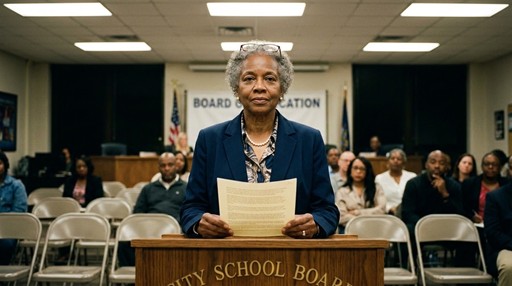
Speaking at a school board meeting is not the same as venting frustration. It is not a moment to release everything you have been holding for months. It is a very short window — usually two to three minutes — to put specific facts on a public record in a way that is difficult for the board to ignore and impossible for them to later claim they never heard.
Parents who use that window well walk away having accomplished something specific: they have formally put the board on notice, they have created a public record of the school’s failure to respond, and they have signaled to the institution that the accountability chain now extends to its governance level.
Parents who use it poorly — who speak emotionally, exceed their time, or cover too many points without focus — often leave feeling worse than when they arrived, with nothing meaningfully changed.
This article tells you exactly how to prepare, what to say, and how to walk out of that room having done something useful.
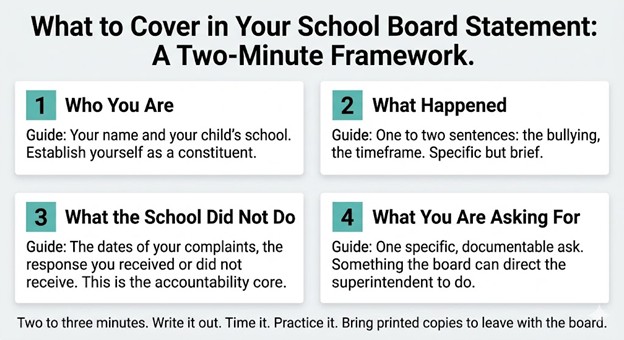
A parent speaking at a school board meeting about bullying should cover four things in their allotted time: who they are and which school their child attends; a brief, specific summary of the bullying situation and when it began; a factual account of what they reported to the school, when, and what response they received or did not receive; and a specific ask — what they want the board to do.
The ask is the most important part. Without a specific ask, a school board statement is a story. With one, it is a request that requires a response. Board members can acknowledge a story. They are more accountable for ignoring a specific documented request made in a public meeting.
Everything in those two to three minutes should be factual, specific, and calm. The goal is not to be the most emotional speaker in the room. It is to be the most credible.
Parents who reach the point of speaking at a school board meeting have almost always been through a long process — and the board meeting is not a first step. It is a late-stage escalation that comes after the school and district levels have failed to produce an adequate response.
The board meeting is a public forum, not an investigation. School boards do not typically conduct investigations in response to public comment. What they do is receive information on the public record — and in doing so, become officially aware of it. A board that was told about a situation at a public meeting and did nothing is in a different institutional position than one that was never told. That difference matters.
The two-to-three-minute limit is real and enforced. Most school boards limit public comment to two or three minutes per speaker. This is not negotiable. Preparing a statement that fits within that time — and that covers the four key elements — is the work. Arriving with a six-minute speech and getting cut off at two is not effective. Arriving with a tight, focused two-minute statement is.
What you say becomes part of the public record. School board meetings are typically recorded and the minutes are public documents. What you state at the podium is on the record in a way that an email to the superintendent is not. That permanence is part of the value — and part of the reason the statement needs to be factual, not emotional or accusatory in ways that could create complications for you.
The board meeting is most useful when paired with written follow-up. Speaking at the meeting creates the public record. Following up with a written email to the board chair and superintendent — referencing your public comment, attaching your documentation, and restating your specific ask — converts the public statement into a documented request that requires a written response.
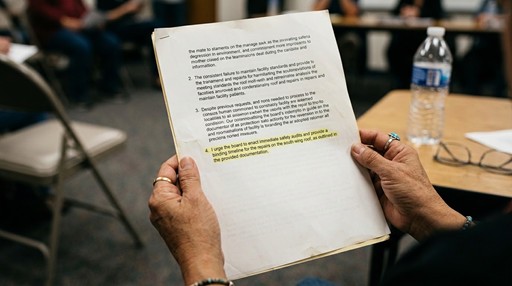
Speaking at the board meeting creates the public record. What you do in the days after determines whether it produces action.
Speaking at a school board meeting is a significant step — and it works best when it is part of a larger strategy, not a standalone action taken in frustration. If you want help preparing your statement, organizing your documentation package, or deciding whether the board meeting is the right next step for your specific situation, outside support can help you walk in ready.
In most districts, yes. Public comment usually requires advance sign-up, either online, by phone, or in person before the meeting begins. Deadlines vary — some districts require sign-up several days in advance, while others allow registration shortly before the meeting starts. You should check your district’s official website or call the board office to confirm the exact process. If you miss the deadline, you typically cannot speak at that meeting, so it is important to confirm both the meeting date and the sign-up cutoff as early as possible.
The school board does not handle individual investigations or direct student discipline. Their role is governance — setting policy, overseeing the superintendent, and ensuring the district is functioning appropriately. However, they can require the superintendent to respond, request reports on how a situation was handled, and apply oversight pressure if district responses are inadequate. Speaking at a board meeting is most effective as an escalation step that brings attention to a breakdown in the administrative process rather than as a request for direct intervention in a specific case.
This is common in high-stress situations involving your child. If emotion comes up, pause briefly, take a breath, and continue when you are ready. A short pause is acceptable and will not undermine your message. The important thing is to finish your statement. Practicing your remarks beforehand can help you stay grounded, but even if you become emotional, continuing calmly after a pause is enough. Being emotional does not weaken your credibility — not finishing your statement has more impact than showing emotion.
Yes, and it is often a good idea. Most school boards allow written materials to be submitted to the board clerk or chair before or during the meeting. A concise written summary — including your timeline, key facts, and specific request — ensures your concerns are officially recorded even if your speaking time is limited. Bring printed copies for submission at the meeting and also email the same document to the board chair and superintendent after the meeting so there is a clear written record at the governance level.
If you want student harm treated like a school safety and civil rights issue—start with SANI at https://saninstitute.net
Most bullying cases do not need a lawyer. Some clearly do. Knowing the difference before you act matters more than most parents realize. The decision

There is a point in many bullying cases where the parent has done everything right — and it still is not working. The emails are

Patience with a school that isn’t responding isn’t a virtue. At some point it becomes a cost your child is paying. Most parents start at
You tried the school. You tried the district. You documented everything. And your child was still harmed. This is the question that parents arrive at