

When Do Parents Need a Lawyer for School Bullying?
Most bullying cases do not need a lawyer. Some clearly do. Knowing the difference before you act matters more than most parents realize. The decision
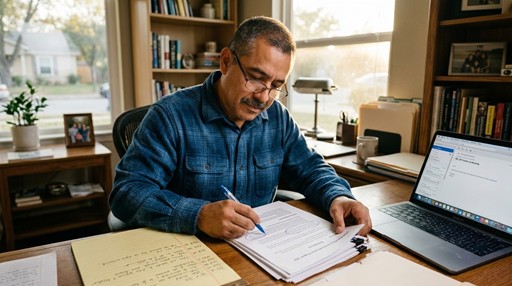
After a bullying incident, most parents focus on what happens next — the next meeting, the next phone call, the next attempt to get the school to take action. What they rarely do is look back at what already exists.
Schools generate paperwork. Incident reports. Discipline records. Investigation notes. Email chains between staff. Nurse visit logs. Counselor referral forms. Much of this documentation exists whether the school mentions it to you or not.
And under federal law — specifically the Family Educational Rights and Privacy Act, known as FERPA — parents generally have the right to review their child’s education records. That right is more useful than most parents realize, and it is underused in almost every bullying case.
If the school has been minimizing the issue, moving slowly, or telling you one thing while doing another, requesting records is one of the most concrete steps you can take. What those records contain — or conspicuously do not contain — tells you a great deal about how seriously the school has been treating your child’s situation.
Parents can request their child’s education records under FERPA, which includes a wide range of school-generated documents. In the context of a bullying situation, the most relevant records include incident reports, disciplinary records, investigation notes, nurse visit logs, counselor referrals, and any written communications between school staff about your child’s case.
The school is generally required to provide access to those records within 45 days of a written request — though many districts respond faster. There is no requirement that records be handed over spontaneously. You have to ask. And you have to ask in writing.
One important limitation: FERPA protects the privacy of other students. This means records related to what happened to your child are accessible, but records that contain identifying information about other students — including the child who bullied yours — may be redacted or withheld in part.
When parents request school records after a bullying incident, they are often looking for one of three things — and what they find (or do not find) is frequently revealing.
They want to know if the school documented the incident at all. A school that claims to have investigated but has no incident report, no investigation notes, and no record of any staff action may have done far less than they implied. The absence of documentation is itself meaningful.
They want to know if there is a pattern on record. If your child has been targeted repeatedly, prior incident reports — or the lack of them — establish whether the school was aware of an ongoing problem. A school that knew about repeated incidents and failed to act is in a different position than one receiving a first report.
They want to know whether what the school told them matches what the records show. Parents sometimes discover that what they were told verbally — ‘we handled it,’ ‘we spoke to both students,’ ‘we found no evidence of bullying’ — does not align with what is actually in the file. Those discrepancies matter.
Records requests also signal to the school that you are organized, that you are paying attention, and that you are building a record of your own. That signal alone sometimes changes how a school responds going forward.
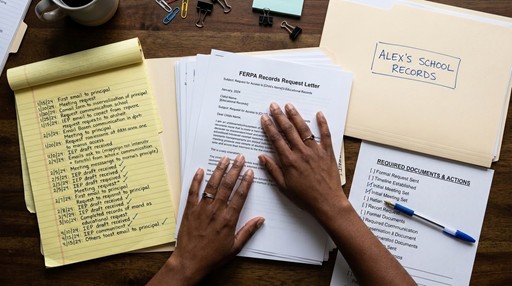
A records request is a procedural step — but what you find in those records, or what you find missing, may change what needs to happen next. Consider escalating if:
Requesting school records is one of the most concrete and underused steps available to parents in a bullying situation. What you find — or what is conspicuously missing — can shape everything that comes next. If you want help understanding what to ask for, how to read what you receive, or what to do with what you find, outside support can make a significant difference.
FERPA applies to schools that receive federal funding — which includes virtually all public schools and many private schools. If your child attends a public school, FERPA applies. The right to review and request copies of education records belongs to parents until the student turns 18, at which point the rights transfer to the student.
FERPA gives you the right to your child's education records — which includes records the school created or maintained in connection with your child. Incident reports, investigation files, counselor notes, and staff communications that reference your child are generally included. General school policy documents, staff training records, or records that do not involve your child specifically are outside the scope of a FERPA request, though some of those may be accessible through other channels such as public records requests depending on your state.
Schools sometimes resist records requests by citing confidentiality — particularly when other students are involved. They may legitimately redact or withhold portions of records that would identify another student. But they cannot use confidentiality as a blanket reason to deny access to your child's own records. If the school refuses to provide records they are required to share, put that refusal in writing, note the date, and consider filing a complaint with the U.S. Department of Education's Family Policy Compliance Office.
FERPA gives parents the right to request an amendment to records they believe are inaccurate, misleading, or in violation of the child's privacy rights. Submit that request in writing to the school. If the school declines to amend the record, they must inform you in writing and advise you of your right to a hearing. If the hearing does not result in an amendment, you have the right to place a written statement in the file explaining your objection — and that statement must be maintained with the record.
If you want student harm treated like a school safety and civil rights issue—start with SANI at https://saninstitute.net
Most bullying cases do not need a lawyer. Some clearly do. Knowing the difference before you act matters more than most parents realize. The decision

There is a point in many bullying cases where the parent has done everything right — and it still is not working. The emails are

You have three minutes. Make them the most organized three minutes the board has heard on this topic. Speaking at a school board meeting is

Patience with a school that isn’t responding isn’t a virtue. At some point it becomes a cost your child is paying. Most parents start at