

When Do Parents Need a Lawyer for School Bullying?
Most bullying cases do not need a lawyer. Some clearly do. Knowing the difference before you act matters more than most parents realize. The decision
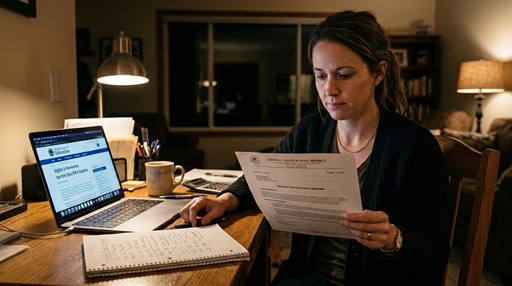
You’ve reported it. You’ve followed up. You’ve sent the emails, attended the meetings, and documented everything. And the school has either done nothing, done something that changed nothing, or told you the situation is resolved when your child’s daily experience says otherwise.
At some point, the question shifts from “what can I do at the school level?” to “what can I do above it?”
An OCR complaint is one of the most significant answers to that question — and it is available to any parent whose child has been subjected to harassment based on a protected characteristic that the school failed to address adequately. It does not require a lawyer. It does not cost money to file. And it puts a federal agency directly into the conversation.
This is what you need to know before you file one.
The Office for Civil Rights — OCR — is a division of the U.S. Department of Education that enforces federal civil rights laws in schools. When a school receives federal funding and fails to respond adequately to harassment based on race, color, national origin, sex, disability, or age, OCR has the authority to investigate and require corrective action.
Filing an OCR complaint is appropriate when the harassment involves a protected characteristic, the school has been notified and failed to respond adequately, and informal and school-level escalation has not produced results. It is not a first step. It is the step you take when the steps before it have been exhausted.
Most parents who reach this point have been dealing with the situation for weeks or months. They have a paper trail. They have documented inaction. And they have a child whose protected characteristic — their race, their disability, their sex, their religion — was at the center of what happened to them.
OCR handles harassment, not general bullying. This is the critical distinction. OCR’s jurisdiction covers harassment that is based on a protected characteristic — conduct that is severe, pervasive, or persistent enough to create a hostile environment and that the school knew about and failed to address. General bullying without a connection to a protected characteristic is not within OCR’s scope.
The school’s response — not just the harassment — is what OCR evaluates. OCR does not require that the school prevent all harassment. It requires that the school respond to known harassment in a manner that is prompt, thorough, and reasonably calculated to end the harassment and prevent its recurrence. A school that investigated and took reasonable steps may not have violated civil rights law even if the harassment continued. A school that ignored the complaint, minimized it, or took steps that were clearly inadequate may have.
OCR complaints have a 180-day filing deadline. In most cases, you must file within 180 days of the most recent act of discrimination or the date you became aware of it. This clock matters. If you are considering an OCR complaint, do not wait.
Filing an OCR complaint does not prevent other options. Filing with OCR does not preclude a due process hearing under IDEA for a child with a disability, a state complaint, or a private legal action — though some coordination may be required depending on the circumstances. An educational advocate or attorney can help you understand how these paths interact.

Don’t file an OCR complaint as a first move. OCR evaluates the school’s response to reported harassment. If you haven’t formally reported the harassment to the school in writing, the complaint will be weaker — and OCR may direct you to exhaust school-level remedies first.
Don’t miss the 180-day deadline. This is a hard deadline in most cases. If you are approaching it, file with what you have rather than waiting until your documentation is perfect.
Don’t expect an immediate resolution. OCR investigations take time — often many months. Filing a complaint initiates a process, not an immediate intervention. In the meantime, school-level advocacy and documentation should continue.
Don’t confuse OCR with a court. OCR does not award damages or order a school to pay money to your family. It investigates, makes findings, and can require corrective action — including policy changes, training, and remediation. If monetary damages are a goal, a private legal action through an attorney is a separate path.
Don’t file without documenting the school’s awareness. A complaint against a school that was never formally notified of the harassment is much weaker than one against a school that received written notice and failed to act. Make sure the school’s awareness — and their response or non-response — is clearly documented before you file.
An OCR complaint is a significant escalation — but it is not the only path forward in serious situations.
Consider additional steps if:
An OCR complaint is one of the most powerful tools available to parents — and one of the least used, because most parents don’t know it exists until the situation has already gone further than it should have. If you are at that point, or close to it, the time to act is now.
OCR enforces federal civil rights laws that prohibit harassment and discrimination in federally funded schools based on race, color, national origin, sex, disability, and age. Sex-based harassment includes sexual harassment and, in many circumstances, harassment related to sexual orientation and gender identity when it falls under sex discrimination protections. Religious discrimination is also prohibited under federal civil rights law, and may be addressed through overlapping federal enforcement authority depending on the facts of the case.
No. Parents can file an OCR complaint directly through the official portal at ocrcas.ed.gov without legal representation. The process is designed to be accessible to families. However, if the situation is complex, involves multiple incidents, or may also involve litigation or other legal action, some families choose to consult an educational advocate or civil rights attorney beforehand to help organize documentation and clarify the strongest claims.
OCR first reviews the complaint to determine whether it falls within its jurisdiction and whether there is enough information to proceed. If accepted, OCR notifies the school and requests records and information. They may also conduct interviews, request additional documentation, and in some cases visit the school. The process typically ends with either a finding of no violation or a finding that leads to a resolution agreement requiring the school to take corrective action. Timelines vary and investigations can take several months or longer.
No. Retaliation for filing a civil rights complaint is prohibited under federal law. This includes negative changes in treatment, disciplinary escalation, exclusion, or any other adverse action that is connected to the complaint. If retaliation occurs or is suspected, it should be documented immediately with dates, details, and supporting evidence, and reported to OCR as a separate retaliation allegation.
If you want student harm treated like a school safety and civil rights issue—start with SANI at https://saninstitute.net
Most bullying cases do not need a lawyer. Some clearly do. Knowing the difference before you act matters more than most parents realize. The decision

There is a point in many bullying cases where the parent has done everything right — and it still is not working. The emails are

You have three minutes. Make them the most organized three minutes the board has heard on this topic. Speaking at a school board meeting is

Patience with a school that isn’t responding isn’t a virtue. At some point it becomes a cost your child is paying. Most parents start at