

When Do Parents Need a Lawyer for School Bullying?
Most bullying cases do not need a lawyer. Some clearly do. Knowing the difference before you act matters more than most parents realize. The decision
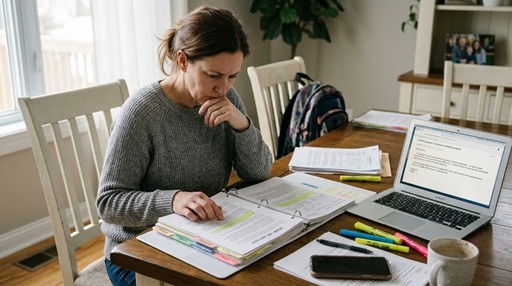
You already know how to fight for your child. You’ve sat through eligibility meetings, argued over goals, pushed for services that weren’t offered until you asked. You understand that your child’s IEP is a legal document — not a suggestion, not a favor.
What you may not know is that bullying can trigger a separate set of obligations on top of everything already in that document. And when a school fails to address bullying that affects a child with a disability, it is not just a bullying problem anymore. It may be a FAPE problem. And FAPE problems have consequences that standard bullying complaints do not.
This is what that means — and what to do about it.
FAPE stands for Free Appropriate Public Education. It is the legal standard every school must meet for every child with a disability under IDEA — the Individuals with Disabilities Education Act. When bullying interferes with a child’s ability to receive the education their IEP promises, the school may be failing to provide FAPE — regardless of whether the bullying itself has been addressed.
That distinction matters. It means that a school can technically “handle” a bullying situation and still be in violation of IDEA if the bullying has disrupted your child’s educational program in ways the school has not corrected.
Parents of children with IEPs often come to bullying situations with more documentation than they realize — years of evaluations, progress reports, and meeting notes that establish a baseline for their child’s functioning. When bullying causes a regression or disruption, that baseline becomes evidence.
Children with disabilities are disproportionately targeted. Research consistently shows that students with disabilities are bullied at significantly higher rates than their non-disabled peers. Schools that serve students with IEPs are expected to be aware of this vulnerability — and to take it seriously when bullying is reported.
Bullying can constitute a denial of FAPE even when it isn’t labeled harassment. If your child’s IEP calls for participation in certain activities, progress toward specific goals, or access to particular services — and bullying is preventing any of that — the school’s obligation to provide FAPE has been affected. The bullying does not need to rise to the level of civil rights harassment for FAPE to be implicated.
The IEP team may need to reconvene. When bullying affects a student with a disability, the appropriate response is not just a bullying investigation — it may also include an emergency IEP meeting to assess whether the current program still meets the child’s needs and what additional supports are required.
Regression is documentation. If your child’s academic performance, behavior, social participation, or emotional regulation has declined since the bullying began, and those areas are addressed in the IEP, that regression is not just a concern — it is evidence that the school’s program may no longer be appropriate.

Don’t let the school handle the bullying and the IEP as completely separate issues. They are connected. A school that investigates the bullying without assessing the impact on your child’s special education program is only doing half the job.
Don’t wait for the annual IEP meeting to raise these concerns. Annual meetings happen on a schedule. FAPE violations don’t wait for that schedule. Request an emergency meeting as soon as you have identified that the bullying is affecting your child’s program.
Don’t accept reassurances that your child is “doing fine” without seeing it in the data. Progress reports, service logs, and goal tracking data tell the real story. If the school says your child is on track but the data shows regression, the data is what matters.
Don’t overlook behavioral changes as IEP impact. If your child’s behavior has changed — more meltdowns, more withdrawal, more refusals — and behavior is addressed anywhere in their IEP, those changes are relevant to the FAPE question. Document them.
Don’t assume that because the school has an IEP in place, they are automatically handling this correctly. An IEP does not prevent a school from mishandling a bullying situation. Your child’s legal protections under IDEA require active monitoring — especially when something has disrupted the program.
The IDEA framework includes specific escalation paths that go beyond standard bullying complaint processes.
Consider escalating if:
Escalation paths for IDEA violations include filing a state special education complaint with your state’s department of education, requesting a due process hearing, or filing a complaint with the U.S. Department of Education’s Office of Special Education Programs. These are formal processes with specific procedures — and they are meaningfully different from a standard bullying escalation. An educational advocate or special education attorney can help you determine which path fits your situation.
When your child has an IEP and is being bullied, the situation is more complex than most schools are prepared to handle — and more complex than most parents realize they have the right to demand be handled correctly.
Not automatically. However, an IEP does create additional legal obligations for the school beyond standard bullying policies. When bullying affects a student with a disability, it may implicate the school’s duty to provide a Free Appropriate Public Education (FAPE) under IDEA, Section 504 protections, and potentially federal civil rights obligations depending on the situation. The IEP itself is not a shield — it becomes meaningful protection only when the impact of bullying is documented and brought into the IEP process.
FAPE stands for Free Appropriate Public Education. Under IDEA, schools must provide students with disabilities an individualized educational program designed to meet their needs at no cost to the family. When bullying interferes with a student’s ability to attend school, access services, make progress on goals, or participate in their educational program, it may rise to the level of a denial of FAPE. In that context, bullying is not just a discipline issue — it becomes an access-to-education issue.
Yes. Parents can request an IEP meeting at any time, and bullying that affects a child’s educational access is a valid reason. The request should be in writing and clearly explain how the bullying is impacting your child’s ability to receive services, attend school, or make progress on IEP goals. Send the request to the special education coordinator and school administration, and keep a copy for your records. Schools are generally expected to respond within a reasonable timeframe.
That is a statement that should be examined carefully. In many cases, students with disabilities are targeted because of characteristics directly connected to their disability, such as communication differences, social interaction styles, behavioral regulation, or physical or cognitive traits. If there is any connection between the bullying and your child’s disability, that connection is relevant under special education law. If the school denies it, document the response and consider whether additional review by a special education advocate or attorney is appropriate.
If you want student harm treated like a school safety and civil rights issue—start with SANI at https://saninstitute.net
Most bullying cases do not need a lawyer. Some clearly do. Knowing the difference before you act matters more than most parents realize. The decision

There is a point in many bullying cases where the parent has done everything right — and it still is not working. The emails are

You have three minutes. Make them the most organized three minutes the board has heard on this topic. Speaking at a school board meeting is

Patience with a school that isn’t responding isn’t a virtue. At some point it becomes a cost your child is paying. Most parents start at