

When Do Parents Need a Lawyer for School Bullying?
Most bullying cases do not need a lawyer. Some clearly do. Knowing the difference before you act matters more than most parents realize. The decision
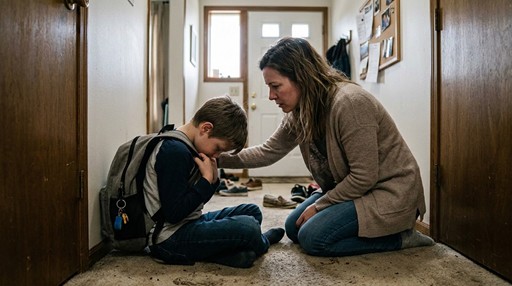
It started with stomachaches. Then it was headaches. Then they started crying before you even said it was time to get ready. Now they’re refusing to go entirely — and you can see that whatever is happening is not a phase, not laziness, and not something a stern talk is going to fix.
School refusal related to bullying is one of the clearest signals a child’s body and mind can send. It is not defiance. It is protection. Your child has decided — consciously or not — that the threat inside that building is greater than the consequences of staying home.
The question you’re asking now is the right one. But the answer is more nuanced than a yes or a no.
A psychological evaluation is not always the first step — but it is worth considering sooner than most parents realize, especially when school refusal has been going on for more than a few weeks, when your child is showing signs of anxiety or depression, or when the school is using your child’s absences against you rather than treating them as a symptom of something that needs to be addressed.
An evaluation can document what is happening to your child in clinical terms — and that documentation can change what the school is required to do.
School refusal is not a diagnosis. It is a behavior — one that shows up for different reasons and looks different in different children. But when it is connected to bullying, the pattern tends to have specific characteristics.
The refusal is targeted, not general. Your child may be fine on weekends, fine during school breaks, fine at activities outside of school. The distress is specifically connected to the school environment — which points to something happening there, not a general anxiety disorder unconnected to circumstances.
Physical symptoms appear on schedule. Stomachaches, headaches, nausea, and sleep disruption that cluster around school days and ease on days off are the body’s stress response doing exactly what it is designed to do. These are real symptoms, not fabrications — and they are worth documenting with your child’s pediatrician.
The child can name the fear even if they won’t name the person. Many school-refusing children will tell a parent “something bad happens there” even if they are not ready to identify the specific person or incident. That level of disclosure is significant and worth writing down.
The school’s response has made things worse. When a school responds to absences with attendance letters, threats of truancy proceedings, or pressure on the child to return without addressing what caused the refusal, it can deepen the crisis. A child being told to go back to the place that is hurting them — without any evidence that the situation has changed — is not going to simply comply.
Don’t push your child back into the building without addressing what’s causing the refusal. Forcing a return to an unsafe environment without any change to that environment typically makes school refusal worse, not better. The goal is a safe return — not just a physical one.
Don’t accept “school anxiety” as a complete explanation without asking what is driving it. Anxiety is real. But anxiety that is specifically connected to a school environment where bullying is occurring is not a free-floating disorder — it has a cause. Make sure any clinician you work with understands the full picture.
Don’t wait for the school to initiate support. Schools do not typically reach out proactively when a child starts refusing. You will need to ask specifically — and in writing — what the school is doing to address both the bullying and your child’s ability to return safely.
Don’t let the evaluation process delay action on the bullying. A psychological evaluation can take weeks. The bullying report, the documentation, and the school’s obligation to act do not wait for evaluation results. Both tracks should move forward simultaneously.
Don’t minimize what you’re seeing. School refusal at this level is a significant stress signal. It is not a parenting failure. It is not your child being dramatic. It is information — and it deserves to be taken seriously by every adult involved.
School refusal connected to bullying is both a protective and a clinical situation — and it may warrant escalation on more than one front.
Consider moving to more urgent action if:
If your child is in crisis — expressing thoughts of self-harm or suicide — that is an emergency that goes beyond school advocacy. Contact a mental health professional or crisis line immediately.
When a child stops being able to go to school, the situation has moved past emails and meetings. You need support that understands both the clinical and the advocacy dimensions — and you need it soon.
Under the Family Educational Rights and Privacy Act (FERPA), schools are required to provide access to requested education records within 45 days. Many schools respond sooner. If you do not receive a response within that timeframe, it is appropriate to follow up in writing and reference the 45-day requirement.
Generally, no. FERPA protects the privacy of all students, so schools typically cannot disclose another student’s disciplinary records or identifying information. However, they may confirm that appropriate action was taken. You are entitled to access your own child’s records, including incident reports, notes, and communications that involve your child.
You can request written confirmation that no records exist, including incident reports, notes, or communications related to your child. If you have documentation showing that concerns were reported, this discrepancy may be important to document and follow up on.
No. Parents or legal guardians can submit a request directly to the school or district. The request should be in writing, clearly identify the student, and describe the records being requested. If you encounter difficulties or need help understanding the records, you may choose to seek additional guidance.
If you want student harm treated like a school safety and civil rights issue—start with SANI at https://saninstitute.net
Most bullying cases do not need a lawyer. Some clearly do. Knowing the difference before you act matters more than most parents realize. The decision

There is a point in many bullying cases where the parent has done everything right — and it still is not working. The emails are

You have three minutes. Make them the most organized three minutes the board has heard on this topic. Speaking at a school board meeting is

Patience with a school that isn’t responding isn’t a virtue. At some point it becomes a cost your child is paying. Most parents start at