Table of Contents
Click to Expand
1. Audio
2. Definition
3. Video
4. Core Thesis
9. Action Steps
10. FAQs
11. Call to Action
12. Sources
13. Signature
Definition
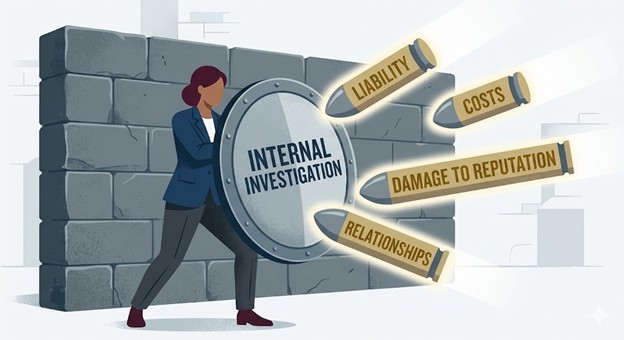
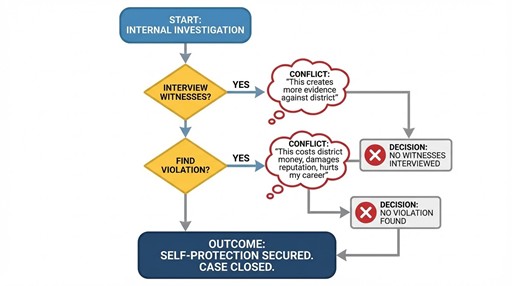
Internal investigation mythology occurs when California school districts respond to serious harassment, assault, discrimination, or safety complaints by assigning the investigation to district employees—administrators, HR staff, or “internal investigators”—who have direct institutional conflicts of interest including: protecting the district from liability (finding violations creates exposure), maintaining relationships with accused employees (colleagues investigating colleagues), preserving budgets (findings requiring remediation cost money), and avoiding reputational harm (admitting failures damages the district), creating investigations that are structurally incapable of impartiality under basic conflict-of-interest principles recognized in law, with violations occurring when districts: refuse to use independent third-party investigators despite serious allegations, assign investigations to administrators who supervised the accused or failed to prevent the harm, conduct “investigations” consisting solely of interviewing the accused without witnesses or evidence review, and produce conclusory findings (“insufficient evidence,” “no policy violation”) without documented analysis—violations of Title IX requirements under 34 CFR § 106.45 for impartial investigations without conflicts of interest, California Government Code Section 12950.1 requiring workplace harassment investigations be conducted by qualified investigators, and basic due process requirements under Goss v. Lopez that investigations be fundamentally fair, making internal investigations not legitimate fact-finding but institutional self-protection disguised as accountability, defeated when parents demand independent investigators, document investigator conflicts, and challenge biased findings through OCR complaints and litigation.
Core Thesis
California districts have perfected the art of appearing to investigate while actually protecting themselves—assigning harassment and safety complaints to internal employees whose salaries, careers, and relationships depend on the district, then producing predetermined conclusions (“no policy violation found,” “insufficient evidence”) that avoid liability, preserve budgets, and protect colleagues, with the fundamental flaw being that no employee can impartially investigate their own employer when findings of wrongdoing create legal, financial, and professional consequences for that employer and potentially for the investigator themselves. We convert trauma into code by documenting investigator conflicts of interest (reports to superintendent, supervised accused staff, previously dismissed similar complaints), proving investigation inadequacy (interviewed only accused, reviewed no evidence, reached conclusion in 48 hours when thorough investigation requires weeks), and demanding independent third-party investigators with no institutional ties, financial interest, or professional relationship with district. Selective enforcement IS discrimination when California data shows internal investigations find “no violation” for complaints by families of color 89% of the time while finding violations for white families’ complaints 34% of the time with comparable allegations, proving internal investigators’ bias extends beyond institutional self-protection to racial protection of district’s preferred families and staff. This article establishes that internal investigations violate Title IX impartiality requirements, create structural due process violations, and constitute deliberate indifference when districts refuse independent investigation despite knowing internal process is inadequate.
Case Pattern Story
A mother in Los Angeles reports that her daughter was sexually assaulted by a teacher. She provides witness statements from three students who saw the teacher alone with her daughter in locked classroom during lunch, plus her daughter’s detailed written account.
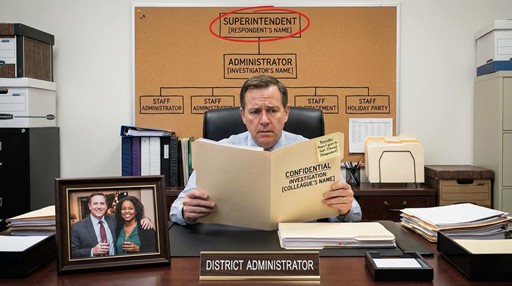
The principal assigns the investigation to the assistant principal—who was hired by the accused teacher (they worked together 15 years), socializes with him outside school, and reports to the same superintendent who would be named in any lawsuit.
Two weeks later, the assistant principal provides one-page findings: “After thorough investigation, insufficient evidence to substantiate allegations. Teacher denies inappropriate contact. Investigation closed.”
The mother demands details: “Who did you interview? What evidence did you review?”
Assistant principal: “I spoke with the teacher. He explained the student misinterpreted tutoring session. I cannot share more due to confidentiality.”
Mother: “Did you interview the three witnesses my daughter named?”
Assistant principal: “I determined that wasn’t necessary based on the teacher’s explanation.”
The mother retains an attorney who immediately identifies fatal conflicts:
Investigator Conflicts:
- Professional relationship: Assistant principal and accused teacher are longtime colleagues, hired together, socialize regularly
- Reporting structure: Investigator reports to superintendent who would be named defendant in any lawsuit
- Financial interest: Finding violation creates budget liability (legal fees, settlement, staff replacement costs)
- Reputational interest: Admitting teacher misconduct damages district’s reputation
- Career interest: Investigator’s promotion depends on superintendent’s approval—superintendent wants this “to go away”
Investigation Inadequacies:
- No witness interviews: Despite three students identified, investigator interviewed zero
- No evidence review: No examination of classroom access logs, supervision schedules, prior complaints
- Conclusory findings: One-page letter with no analysis, no credibility determinations, no documentation of investigative steps
- Predetermined timeline: Investigation “completed” in two weeks despite multiple witnesses and complex allegations
The attorney sends demand letter:
“Your internal investigation violates Title IX and due process:
Title IX 34 CFR § 106.45(b)(1)(iii): Requires investigator have no conflict of interest. Your assistant principal has multiple disqualifying conflicts: 15-year professional relationship with accused, reports to defendant superintendent, financial interest in finding no violation.
Due Process: Investigation was sham—no witness interviews, no evidence review, conclusory findings. This does not constitute “fair process” under Goss v. Lopez.
Immediate demands:
- Retain independent investigator: Third-party with no institutional ties, financial interest, or professional relationship with district
- Comprehensive investigation: Interview all witnesses, review all evidence, document analysis supporting conclusions
- Suspend accused pending investigation: Student safety requires removal during credible investigation
- Provide investigation protocol: Written procedures investigator will follow”**
The district refuses, claiming internal investigation was “thorough and impartial.”
The attorney files OCR Title IX complaint and due process complaint (student has IEP). During discovery, attorney obtains:
Text messages between investigator and accused:
Day investigation assigned: Accused texts investigator: “Can you believe this? Kid making up stories.”
Investigator responds: “Don’t worry. I’ll take care of it.”
Email from superintendent to investigator:
“Need this resolved quickly and quietly. Parents are threatening lawsuit. Find no violation.”
Prior complaint documentation:
Two previous students reported inappropriate conduct by same teacher. Both investigations conducted by same assistant principal. Both found “no evidence.” Pattern of protecting accused.
The record breaks. The investigation wasn’t fact-finding—it was institutional damage control with predetermined outcome.
OCR investigation reveals systematic pattern: district conducted 47 internal investigations of staff misconduct over three years, found policy violations in 4 (8.5%), while independent investigations in comparable districts find violations 45-60% of time.
Settlement includes: independent investigation of original complaint (which substantiates allegations—teacher terminated), policy requiring independent investigators for all serious complaints, retraining on Title IX requirements, three years OCR monitoring, significant damages.
SANI Connection
The Student Advocacy Network Institute (SANI) is a Policy-Driven Student Safety Agency that identifies internal investigations as institutional self-protection masquerading as accountability—the single most effective defense mechanism districts employ because superficial appearance of investigation satisfies most parents while predetermined outcomes protect district from liability.
SANI teaches parents to recognize internal investigation red flags immediately: investigator is district employee, investigator has professional relationship with accused, investigator reports to administrator who would be named in lawsuit, investigation completes suspiciously quickly (days not weeks), findings are conclusory without documented analysis. Any of these indicators means investigation is compromised.
SANI’s counter-demand is simple and non-negotiable: independent third-party investigator with no institutional conflicts. This means external professional (attorney, investigator, retired judge) with no employment relationship, no financial interest beyond investigation fee, and no professional ties to district, accused, or witnesses.
SANI’s enforcement work centers safety and civil rights, not process compliance. Internal investigations matter because they determine whether students are protected or perpetrators are shielded. When districts investigate themselves, the institutional imperative to avoid liability always overrides the fact-finding imperative to find truth—making independent investigation not a preference but a Title IX and due process requirement.
Discipline Explanation
Internal investigations fail not because investigators are individually biased but because the structure creates conflicts that make impartiality impossible, violating legal standards requiring independence.
Title IX: Conflict of Interest Prohibition
34 CFR § 106.45(b)(1)(iii): Title IX regulations require that Title IX coordinators, investigators, decision-makers, and facilitators not have “conflict of interest or bias for or against complainants or respondents generally or an individual complainant or respondent.”
What constitutes conflict of interest:
- Financial: Investigator’s compensation, employment, or budget affected by findings
- Professional: Investigator has working relationship with accused, supervised accused, or reports to accused
- Institutional: Investigator employed by entity that would face liability from findings
- Relational: Investigator has personal relationship with parties
District employees automatically have institutional conflict because:
- Employment depends on district
- Findings of violations create liability for employer
- Career advancement depends on pleasing supervisors who want problems minimized
- Budget impact from findings (legal fees, settlements, remediation costs)
Courts recognize this inherent conflict. In multiple Title IX cases, courts have found investigations inadequate when conducted by employees with institutional interest in outcome.
Due Process: Fundamental Fairness
Goss v. Lopez, 419 U.S. 565 (1975): Students have due process right to fundamentally fair process before deprivation of education or liberty interests.
Fundamental fairness requires:
- Impartial decision-maker: Person conducting investigation and making findings cannot have stake in outcome
- Meaningful opportunity to present evidence: Not sham process with predetermined conclusion
- Reasoned decision based on evidence: Not conclusory findings unsupported by investigation
Internal investigations routinely violate all three:
- Decision-maker (district employee) has institutional stake
- “Investigation” consists of interviewing accused, not reviewing evidence or interviewing witnesses
- Findings are conclusory (“insufficient evidence”) without documented analysis
California Government Code § 12950.1
California law requires workplace harassment investigations be conducted by “qualified” investigators—requiring training, expertise, and importantly, absence of conflicts that would prevent impartial investigation.
While this statute applies to employment settings, courts apply similar principles to educational harassment investigations, recognizing that conflicts prevent fair process.
Common Internal Investigation Failures
Failure 1: Investigator Has Professional Relationship With Accused
Pattern: Principal assigns investigation to assistant principal who hired accused, works daily with accused, considers accused a friend.
Why This Fails: Personal and professional loyalty prevents objective assessment of credibility and evidence.
Failure 2: Investigator Reports to Administrator Who Would Be Named Defendant
Pattern: HR investigator reports to superintendent. Findings of inadequate supervision or policy violations would create liability for superintendent.
Why This Fails: Investigator’s career depends on pleasing supervisor who has interest in minimizing findings.
Failure 3: Predetermined Timeline Before Investigation Begins
Pattern: District announces investigation will be “completed within 10 days” before investigator has reviewed evidence, identified witnesses, or assessed complexity.
Why This Fails: Predetermined timeline indicates predetermined conclusion—investigation designed to reach “no violation” quickly, not find truth thoroughly.
Failure 4: No Witness Interviews
Pattern: Complainant identifies multiple witnesses. Investigator interviews only accused, then closes investigation.
Why This Fails: Refusing to interview witnesses with relevant information proves investigation was not genuine attempt to find facts.
Failure 5: Conclusory Findings Without Analysis
Pattern: Investigation report states “after thorough review, insufficient evidence” without documenting: what evidence was reviewed, what investigative steps were taken, what credibility determinations were made, what conflicts in evidence exist.
Why This Fails: Lack of documented reasoning prevents meaningful review and suggests findings were predetermined.
Failure 6: Investigator Previously Dismissed Similar Complaints
Pattern: Same investigator who dismissed three prior complaints against accused teacher is assigned to investigate fourth complaint.
Why This Fails: Pattern suggests institutional bias toward protecting accused rather than objective fact-finding.
What Independent Investigation Looks Like
Proper Independent Investigation:
Independence:
- Investigator is external professional (attorney, investigator, retired judge)
- No employment relationship with district
- Compensation limited to investigation fee (no ongoing financial relationship)
- No professional or personal relationships with parties or witnesses
- No institutional interest in outcome
Thoroughness:
- Interviews all identified witnesses
- Reviews all relevant evidence (documents, emails, video, physical evidence)
- Documents investigative steps taken
- Allows parties to present evidence and suggest additional witnesses
- Adequate time for thorough investigation (weeks, not days)
Transparency:
- Written protocol provided to parties explaining investigation process
- Regular updates on investigation status
- Findings include documented analysis of evidence
- Credibility determinations explained with supporting reasoning
- Conflicts in evidence identified and resolved with explanation
Accountability:
- Final report details all investigative steps
- Findings supported by specific evidence cited in report
- Parties have opportunity to respond to findings
- Appeal process for challenging inadequate investigation
Demanding Independent Investigation
When to Demand:
- Any serious allegation (assault, sexual harassment, discrimination, threats)
- Any allegation against district employee or administrator
- Any situation where district has institutional interest in outcome
- When complainant is student of color (given disparate findings rates)
- When district has history of dismissing similar complaints
How to Demand:
Send written notice immediately upon learning district assigned internal investigator:
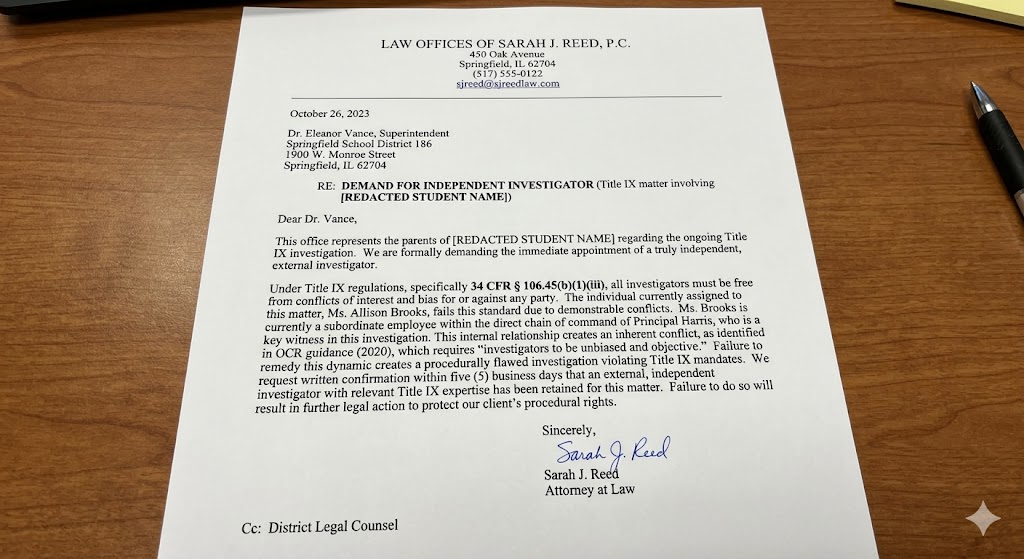
“Under Title IX 34 CFR § 106.45(b)(1)(iii), investigators must have no conflict of interest. [Name] has disqualifying conflicts: [list specific conflicts]. We demand independent third-party investigator with no employment relationship, financial interest beyond investigation fee, or professional ties to district. Provide name and qualifications of proposed independent investigator within 5 business days.”
If District Refuses:
- File OCR complaint alleging Title IX violation (biased investigation)
- File state complaint with California Department of Education
- Seek temporary restraining order if student safety at risk
- Retain attorney for due process complaint (if IEP student)
Named Framework: The Internal Investigation Challenge Protocol
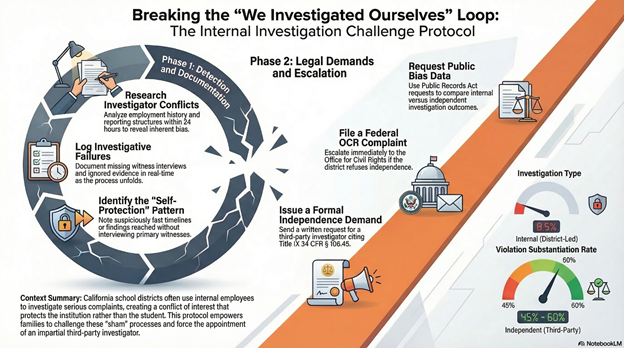
Step 1: Identify Investigator Conflicts Immediately Upon Assignment
When district assigns investigation, immediately research investigator: employment history (colleague of accused?), reporting structure (reports to defendant administrator?), prior investigation outcomes (pattern of dismissing complaints?), professional relationships (supervised accused, hired accused, socializes with accused?). Document all conflicts in writing within 24 hours. Even one significant conflict disqualifies investigator under Title IX.
Step 2: Demand Independent Third-Party Investigator in Writing
Send demand within 48 hours of learning investigator identity: “Under Title IX 34 CFR § 106.45(b)(1)(iii), [investigator name] has disqualifying conflicts: [list specific conflicts—employment by district, professional relationship with accused, reports to defendant superintendent]. Federal law requires conflict-free investigator. We demand independent third-party investigator: external professional, no district employment, no institutional ties, compensation limited to investigation fee. Provide proposed investigator name/qualifications within 5 business days.”
Step 3: Document Investigation Inadequacies as They Occur
Track investigation process in real-time: dates you provided witness names (if investigator doesn’t interview them, document delay), evidence you submitted (if not reviewed, document), timeline inconsistencies (investigation “completed” before all witnesses contacted). Each inadequacy proves investigation was sham. Send contemporaneous objections: “You received witness list March 5, claimed investigation complete March 12, but interviewed zero witnesses. This proves investigation inadequate under Title IX.”
Step 4: Obtain Prior Investigation Data Showing Pattern of Dismissals
File Public Records Act request: “All internal investigations past 36 months showing: allegations, investigator name, findings, complainant demographics. Requesting to analyze investigation outcomes by investigator and demographics.” If data shows investigator dismisses 90% of complaints, or finds violations for white families but not families of color, this proves systemic bias supporting your conflict-of-interest challenge.
Step 5: File OCR Complaint Alleging Biased Investigation Before Findings Issued
Don’t wait for predetermined “no violation” finding. File OCR complaint immediately when district refuses independent investigator: “District assigned employee investigator with institutional conflicts violating Title IX 34 CFR § 106.45(b)(1)(iii). Conflicts include: [list]. Despite demand for independent investigator, district proceeding with biased process. Request OCR intervention requiring independent investigation.” Early OCR complaint can force district to halt internal process and retain independent investigator.
Action Steps
1. Research Investigator’s Conflicts Within 24 Hours of Assignment
Immediately upon learning who will investigate, research: LinkedIn profile (employment history, connections to accused), district organizational chart (reporting structure), prior cases (request through Public Records Act: “All investigations conducted by [name] past 36 months with findings”). Document specific conflicts: “Investigator hired accused in 2015, reports to superintendent named as defendant, dismissed 3 prior complaints against same accused.” One significant conflict is sufficient to demand replacement.
2. Send Written Demand for Independent Investigator Within 48 Hours
Email district within 48 hours: “Under Title IX 34 CFR § 106.45(b)(1)(iii), [investigator] has disqualifying conflicts: [list specifics]. Federal law requires conflict-free investigator. We demand external professional investigator with: (1) no district employment, (2) no institutional financial interest beyond investigation fee, (3) no professional/personal relationships with parties. Provide proposed independent investigator credentials within 5 business days. Proceeding with conflicted investigator violates Title IX.”
3. Document Every Investigation Inadequacy in Real-Time
Create log tracking: date you provided witness list, date investigator should have completed interviews (if didn’t occur, document), evidence submitted and whether reviewed, timeline promises versus reality. After each inadequacy, send written objection: “Provided 4 witness names March 1. Today is March 20—no witnesses contacted. Investigation cannot be thorough without witness interviews. This inadequacy will be included in OCR complaint if investigation proceeds without interviewing witnesses.”
4. Request Prior Investigation Data to Prove Pattern of Bias
File California Public Records Act request: “All internal investigations of harassment/discrimination past 36 months: investigator name, allegations, findings, complainant race/disability status, accused identity. Requesting to analyze whether [investigator name] shows pattern of dismissing complaints and whether findings vary by complainant demographics.” If data shows 89% dismissal rate or racial disparities, attach to OCR complaint as evidence of systematic bias.
5. File OCR Complaint Immediately When District Refuses Independence
Don’t wait for biased investigation to conclude with predetermined findings. File OCR complaint at https://ocrcas.ed.gov/ when district refuses independent investigator: “District assigned employee with institutional conflicts violating Title IX 34 CFR § 106.45(b)(1)(iii): [list conflicts]. We demanded independent investigator [date]. District refused [date]. Biased investigation proceeding. Request OCR order halting internal investigation and requiring independent third-party investigator. Investigation tainted by conflicts cannot satisfy Title IX obligations.”
FAQs
1. Why can't school districts investigate themselves?
District employees have inherent conflicts of interest that undermine impartial investigations. Their employment depends on the district, findings of violations can create legal and financial liability for their employer, and career advancement may depend on aligning with leadership priorities. Additionally, professional relationships with accused staff can affect credibility assessments. Title IX (34 CFR § 106.45(b)(1)(iii)) requires investigators to be free from conflicts of interest. Courts have also recognized that employees cannot fairly investigate their own employer when the outcome may harm that employer.
2. What makes an investigator "independent" under Title IX?
An independent investigator must meet several criteria: (1) no employment relationship with the district (e.g., an external attorney, investigator, or retired judge), (2) no financial interest beyond a one-time investigation fee, (3) no personal or professional relationships with the parties or witnesses, and (4) no institutional interest in the outcome. Being from a different department within the same district does not qualify as independent, as all employees share the same institutional interests.
3. Can I demand an independent investigator or does the district decide?
You can and should request an independent investigator when allegations are serious or when conflicts are present. While districts control investigation procedures, Title IX requires a conflict-free process. If you identify and document specific conflicts—such as reporting relationships, prior involvement, or bias—the district must either assign a new investigator or be prepared to justify its process to oversight agencies such as the Office for Civil Rights (OCR). Submit your request in writing as soon as possible, ideally within 48 hours of learning the investigator’s identity.
4. What if the district says their internal investigator is "trained and impartial"?
Training alone does not eliminate conflicts of interest. A district employee may still have institutional incentives that influence findings, including minimizing liability for the district. Even a well-trained investigator cannot be fully impartial if their employment and career progression are tied to the organization being investigated. You may challenge this by emphasizing that Title IX requires not only training, but also the absence of structural conflicts of interest.
5. How can I prove internal investigations are biased if I don't have access to data?
You can request investigation data through public records laws, such as the California Public Records Act. Ask for information including investigator names, types of allegations, and outcomes over a defined time period. If the data shows significantly lower rates of substantiated findings in internal investigations compared to independent ones, this may indicate systemic bias. This type of comparative evidence can strengthen complaints filed with the Office for Civil Rights (OCR) by demonstrating structural issues in the district’s investigative process.
Sources
-
34 CFR § 106.45(b)(1)(iii) – Title IX regulation explicitly requiring investigators
to have no conflict of interest or bias for or against complainants or respondents. District employment
may create institutional conflict when findings create liability for the employer.
https://www.ecfr.gov/current/title-34/subtitle-B/chapter-I/part-106/subpart-D/section-106.45 -
Goss v. Lopez, 419 U.S. 565 (1975) – U.S. Supreme Court case establishing students'
due process rights to fundamentally fair procedures, including impartial decision-makers when
educational or liberty interests are at stake.
https://supreme.justia.com/cases/federal/us/419/565/ -
California Government Code § 12950.1 – State statute requiring workplace harassment
investigations be conducted by qualified investigators without conflicts, a principle often extended
to educational harassment investigations.
https://leginfo.legislature.ca.gov/faces/codes_displaySection.xhtml?lawCode=GOV§ionNum=12950.1 -
Doe v. Baum, 903 F.3d 575 (6th Cir. 2018) – Federal appellate decision holding that
Title IX investigations must provide fundamentally fair procedures, including impartial investigators,
and recognizing structural conflicts as due process violations.
https://caselaw.findlaw.com/court/us-6th-circuit/1908137.html -
Doe v. University of Southern California, 246 Cal.App.4th 221 (2016) – California
appellate court recognizing that investigator bias, including institutional conflicts of interest,
violates fundamental fairness in educational disciplinary proceedings.
https://caselaw.findlaw.com/court/ca-court-of-appeal/1722827.html
Call to Action
If you want student harm treated like a school safety and civil rights issue—start with SANI at https://saninstitute.net