

The documentation gap: when “no records” becomes the district’s defense
Table of Contents Click to Expand 1. Audio 2. Definition 3. Video 4. Core Thesis 5. Case Pattern Story 6. SANI Connection 7. Discipline Explanation
1. Audio
2. Definition
3. Video
4. Core Thesis
9. Action Steps
10. FAQs
11. Call to Action
12. Sources
13. Signature
Spoliation of evidence is the intentional or negligent destruction, alteration, concealment, or failure to preserve evidence that a party knows or should know is relevant to pending or reasonably foreseeable litigation—and when applied to schools, it occurs when districts delete emails, destroy incident reports, erase video footage, lose documentation, or fail to preserve records after receiving notice of a potential legal claim related to student safety, harassment, discrimination, or civil rights violations.
Under spoliation doctrine, schools have a legal duty to preserve all relevant evidence once they are on notice of a claim or potential claim, and failure to preserve creates evidentiary presumptions against the school, monetary sanctions, adverse inference instructions to juries, and in severe cases, default judgment—making spoliation one of the most powerful enforcement tools when districts attempt to hide or destroy documentation of safety failures.
Schools routinely destroy or “lose” evidence of safety failures—erasing video footage, deleting emails, claiming incident reports “don’t exist,” or purging documentation under the guise of record retention policies. We convert trauma into code by establishing the school’s duty to preserve evidence from the moment parents report harm, documenting the destruction through preservation notices and spoliation claims. Selective enforcement IS discrimination when schools preserve documentation that protects the district while destroying evidence that exposes patterns of racism, harassment, or negligence. This article proves that spoliation of evidence is not an administrative oversight—it is a predictable institutional self-protection tactic that creates independent legal liability and evidentiary sanctions that can determine the outcome of student safety cases.
The Student Advocacy Network Institute (SANI) is a Policy-Driven Student Safety Agency that identifies spoliation as institutional evidence suppression—a systematic pattern where schools destroy documentation to avoid accountability for safety failures, civil rights violations, and patterns of discrimination.
SANI instructs parents to send preservation notices the moment they report serious harm—explicitly demanding preservation of video footage, emails, incident reports, witness statements, disciplinary records, and safety assessments. This creates a legal duty to preserve and makes any subsequent destruction actionable spoliation.
SANI’s enforcement work centers safety and civil rights, not discovery disputes. Spoliation in school cases is not a technical legal issue—it is direct evidence of institutional consciousness of wrongdoing, where the act of destroying evidence proves the school knew it had failed and chose to hide the proof rather than correct the harm.

Spoliation of evidence is governed by both common law tort principles and procedural rules that impose sanctions for destruction or failure to preserve evidence. The doctrine rests on three foundational concepts:
A party’s duty to preserve evidence arises when litigation is pending or when the party reasonably anticipates litigation. For schools, this duty triggers when:
Once the duty attaches, the school must take reasonable steps to preserve all potentially relevant evidence, including documents, emails, video footage, witness statements, and electronic data.
The duty to preserve extends to evidence that is relevant to the anticipated claims. In student safety cases, relevant evidence includes:
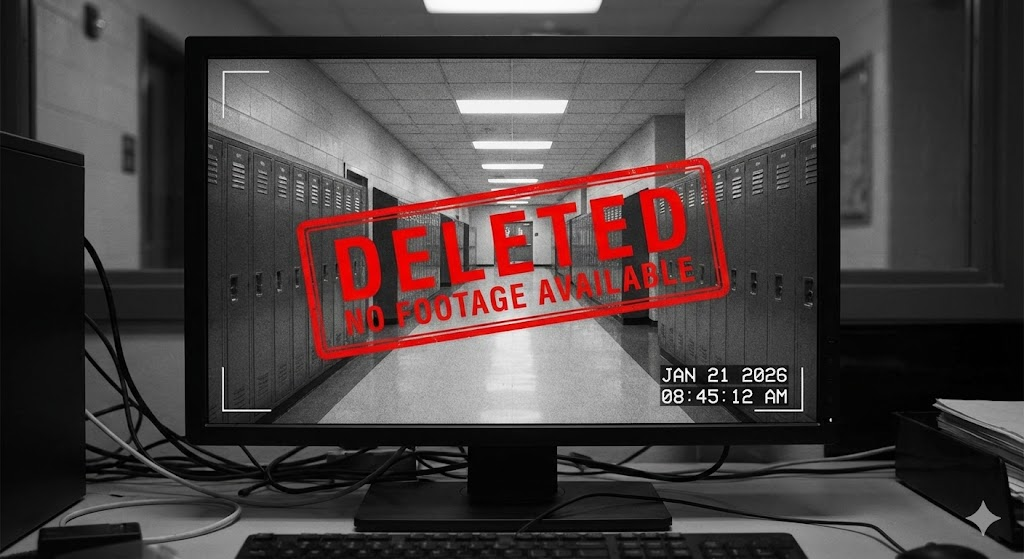
Schools cannot claim they didn’t know what to preserve. When a parent reports bullying in a specific hallway and requests video footage, the school is on notice that the footage is relevant. Automatic deletion policies do not override the duty to preserve once notice is received.
Courts impose sanctions when a party destroys or fails to preserve evidence, including:
The severity of sanctions depends on:
Intentional destruction (deleting emails after receiving a preservation notice, erasing video footage manually, instructing staff not to document) typically results in the harshest sanctions, including adverse inference and default judgment.
Documentation is the parent’s primary defense against spoliation. By sending preservation notices via email with read receipts, parents create a timestamped record that the school was on notice. If the school later claims evidence doesn’t exist or was “automatically deleted,” the parent can prove the school had a duty to preserve and failed.
Pattern evidence makes spoliation more damaging. When parents can show the school routinely destroys documentation in cases involving certain students (Black students, disabled students, students who file complaints), the spoliation becomes evidence of discriminatory intent under Title VI and Section 504.

This framework ensures parents establish the school’s duty to preserve evidence and document any subsequent destruction.
The moment you report serious harm (assault, harassment, discrimination, threats), send a formal preservation notice to the principal, superintendent, and district legal counsel. Use email with read receipt. State: “I am formally requesting that the district preserve all evidence related to this incident, including but not limited to: video footage from [location] from [date range], all incident reports involving my child or [aggressor’s name], all emails or communications between staff regarding this matter, all witness statements, and all disciplinary records. This notice creates a legal duty to preserve under spoliation doctrine.”
In your preservation notice, be specific about what evidence the school should have: “Security cameras are installed in the west hallway where the assault occurred. The school’s own policy states that footage is retained for 30 days. I am requesting preservation of footage from [specific dates and times].” This prevents the school from later claiming they didn’t know what to preserve.
If the school later claims evidence doesn’t exist, was automatically deleted, or is unavailable, send a follow-up email: “On [date], I sent a preservation notice requesting [specific evidence]. Your representation that this evidence is unavailable suggests potential spoliation. Please provide: (1) the date and method of destruction, (2) who authorized the destruction, (3) whether any manual preservation request was made, and (4) written confirmation of your record retention policies.”
If spoliation is suspected, request: email metadata showing deleted messages, video system audit logs showing manual deletions or preservation failures, IT records showing who accessed the evidence system, and the district’s written policies on evidence preservation and record retention. These records often prove the destruction was intentional, not automatic.
If litigation becomes necessary, spoliation should be raised as both: (1) an independent tort claim (intentional or negligent spoliation), and (2) a motion for evidentiary sanctions. Request adverse inference instructions, monetary sanctions, and if the destruction was egregious and intentional, request that the court preclude certain defenses or enter findings against the school. Spoliation is often the strongest evidence of the school’s consciousness of wrongdoing.

Do not wait. As soon as you report assault, harassment, discrimination, or threats, send a formal preservation notice via email to the principal, superintendent, and district general counsel. List every type of evidence that should exist: video footage (with specific dates, times, locations), incident reports, emails, witness statements, disciplinary records. Use the phrase “legal duty to preserve under spoliation doctrine” to make the notice legally effective.
In your preservation notice, demand written confirmation: “Please confirm in writing within 72 hours: (1) that all requested evidence has been preserved, (2) the names of personnel responsible for preservation, and (3) the method of preservation (manual hold, system backup, secure storage).” If the school does not respond, send a second notice and document the silence.
If school personnel tell you (in meetings or phone calls) that they have video footage, incident reports, or other evidence, immediately send a follow-up email: “Thank you for confirming during our meeting today that video footage from [location] exists and will be preserved as part of the investigation.” This creates a written record that the school acknowledged the evidence existed.
Send a formal demand: “Your representation that the video footage is unavailable contradicts your earlier statements and my preservation notice. Please provide: (1) chain of custody documentation, (2) destruction date and method, (3) authorization for destruction, (4) audit logs, (5) email metadata, and (6) written policies. Failure to preserve evidence after notice constitutes spoliation and creates independent legal liability.”
Spoliation should be explicitly named in every formal complaint: to the district, to OCR, to the state department of education, and in any lawsuit. State: “The district destroyed evidence after receiving notice of a potential claim, including [specific evidence destroyed]. This spoliation warrants adverse inference, sanctions, and creates a rebuttable presumption that the destroyed evidence would have supported claims of deliberate indifference and discrimination.”
Spoliation of evidence is the destruction, alteration, concealment, or failure to preserve evidence when a party knows or should know it is relevant to litigation. In schools, spoliation occurs when emails are deleted, incident reports are destroyed, video footage is erased, or documentation is lost after notice of a potential legal claim related to student safety, harassment, or civil rights violations.
A school's duty to preserve begins the moment litigation is reasonably foreseeable. This typically occurs when a parent reports serious harm, requests an investigation, threatens legal action, retains an attorney, or sends a formal preservation notice. The duty also attaches upon complaints from OCR, the state department of education, or other agencies investigating the school.
Schools must preserve all evidence relevant to anticipated claims, including: video footage from areas where harm occurred, incident reports involving the student or aggressor, emails and staff communications, witness statements, disciplinary records, safety assessments, prior complaints about the same location or student, and metadata showing document creation, deletion, or modification.
No—automatic deletion policies do not override the duty to preserve once litigation is foreseeable. Schools must take affirmative steps to prevent deletion, such as manually preserving video footage, implementing litigation holds on emails, and backing up electronic records. Failure to do so constitutes spoliation.
Courts can impose sanctions including adverse inference instructions (juries assume destroyed evidence would hurt the school’s case), monetary penalties, evidentiary exclusions, and in severe cases, default judgment. Spoliation also supports claims of bad faith or consciousness of wrongdoing.
To prove spoliation, document: (1) that you sent a preservation notice, (2) that the school acknowledged the evidence existed, (3) that the school had a duty to preserve, (4) that the evidence was later destroyed or is unavailable, and (5) that the destruction was intentional or negligent. Metadata, audit logs, retention policies, and IT staff testimony can support your claim.
Yes—intentional spoliation (e.g., manually deleting emails after a preservation notice or instructing staff not to document) results in harsher sanctions, including adverse inference and potential default judgment. Negligent spoliation (poor record-keeping, failure to implement preservation procedures) still creates liability but typically leads to lesser sanctions. Evidence of intent, like emails directing staff to avoid documentation, dramatically increases penalties.
If you want student harm treated like a school safety and civil rights issue—start with SANI at https://saninstitute.net
The Student Advocacy Network Institute (SANI) is a national research, accountability, and discipline institute founded by Bullying Is A Drug to define, document, and address institutional failure in K–12 education—treating student harm as a school safety and civil rights issue.
Explore the Institute:
https://saninstitute.net
A sixth-grade student reports being shoved into lockers and racially harassed in the west hallway near the cafeteria. The parent emails the principal with a detailed account, including the date, time, location, witnesses, and requests that the school review security camera footage. The principal responds: “We are investigating and will review all available evidence.”
Two weeks later, the parent requests a follow-up meeting. The principal claims the investigation is “ongoing” but provides no timeline. The parent sends a second email specifically requesting preservation of the hallway video footage. No response.
After one month, the parent retains an attorney who sends a formal preservation notice to the school district, demanding preservation of: all video footage from the west hallway, all incident reports, all emails between staff regarding the student, all witness statements, and all disciplinary records. The letter explicitly warns against spoliation.
The school finally schedules a meeting. The principal claims: (1) no incident reports exist because “we couldn’t confirm the allegations,” (2) the video footage was automatically overwritten after 14 days per district policy, and (3) there are no emails regarding the incident because staff discussed it “in person.”
The parent’s attorney deposes the school’s IT director, who testifies that the video retention system can be manually preserved with a single click—but no administrator requested preservation. The attorney also obtains metadata from the principal’s email account showing four deleted messages sent the day after the parent’s initial complaint. The school’s own record retention policy requires preservation of all emails related to “pending investigations or potential claims.”
The record breaks when a teacher voluntarily provides a printed email chain she preserved—showing the principal instructing staff to “keep conversations about this situation verbal only” and warning them not to create “unnecessary paper trails.” The court later grants an adverse inference instruction, allowing the jury to presume the destroyed evidence would have supported the parent’s claims of deliberate indifference and discrimination.
Table of Contents Click to Expand 1. Audio 2. Definition 3. Video 4. Core Thesis 5. Case Pattern Story 6. SANI Connection 7. Discipline Explanation

Table of Contents Click to Expand 1. Audio 2. Definition 3. Video 4. Core Thesis 5. Case Pattern Story 6. SANI Connection 7. Discipline Explanation
Table of Contents Click to Expand 1. Audio 2. Definition 3. Video 4. Core Thesis 5. Case Pattern Story 6. SANI Connection 7. Discipline Explanation

Table of Contents Click to Expand 1. Audio 2. Definition 3. Video 4. Core Thesis 5. Case Pattern Story 6. SANI Connection 7. Discipline Explanation